

Toxic Sweetness: How Fake Sugar Hijacks Your Mental Health ( And Your Grandchildren's)


Toxic Sweetness and Mental Health
Your anxiety is at an all-time peak. You have tried the deep breathing exercises, the daily walks, yoga, and the endless journaling—yet the overwhelming dread remains. It’s not that those techniques don’t work; it’s that you might actually be fueling your own panic by what you are eating, and it is not what you think! The hidden culprit might be sitting innocently right in your kitchen. Let’s take a look at how fake sugars can completely hijack your mental health and physical health ( and your grandchildren)
Most of us understand that regular table sugar spikes blood sugar levels and aggressively alters our mood. We experience the inevitable "crash" a few hours after consuming it, forcing our physiology into a fight-or-flight survival mode. This certainly wreaks havoc on our stress levels. If you are battling anxiety rooted in an unprocessed trauma response, avoiding regular sugar altogether is a fantastic idea. But artificial sweeteners like aspartame and sucralose take this disruption to a whole different level and they are often hidden in foods we wouldnt expect them to be in.
How Toxic Sweetness Stresses You
Neurotransmitter Disruption: Digested aspartame breaks down into compounds like phenylalanine and aspartic acid. These chemical compounds can cross the blood-brain barrier and overstimulate brain cells, potentially altering your calm-inducing neurotransmitters.
The "Energy Mismatch": Your tongue detects sweetness and signals your brain to prepare for real calories. When zero energy arrives, it triggers a metabolic confusion that can launch a minor internal stress response.
The Gut-Brain Connection: Sweeteners like saccharin can alter the composition of your gut microbiome. Because much of your body’s mood-regulating serotonin is made in the gut, a disrupted microbiome directly links to emotional instability.
Brain Changes to the Grandkids: Landmark research from Florida State University showed that low doses of aspartame induced robust, inherited anxiety behaviors in animal models.. Researchers gave mice drinking water containing a low dose of aspartame—equivalent to humans drinking just six to eight 8-ounces of diet soda a day—and tracked them through maze tests. Not only did the mice exhibit unexpected, intense signs of anxiety, but genetic testing revealed that the chemical actually changed the expression of genes in the amygdala (the brain's fear and panic center). Most shocking of all, these exact anxiety traits and brain changes were passed down through generations. The offspring and even the grandchildren of the male mice that drank aspartame inherited the same exact panic behaviors—even though the descendants had never consumed the sweetener themselves.
Foods Containing Aspartame
Its not just sweet foods that hide the dubious artificial sweeteners; they are covertly packed into everything from your morning toothpaste and protein powders to "healthy" salad dressings and chewable vitamins. Here's a list of some items that contain the worst offenders, Aspartame and Sucralose. Which ones are already in your kitchen?
Chewing Gum: Most mainstream brands, even those not explicitly marketed as "diet," use it for long-lasting flavor.
Flavored Light Yogurts: Brands use it to maintain a sweet taste while marketing low-fat or low-calorie metrics.
Packaged Gelatins: Standard sugar-free gelatin mixes rely heavily on this chemical compound.
Breakfast Cereals: Certain commercial children's and fitness cereals mix it into the crunchy coating.
Prepared Sushi Rice: Some commercial and grocery store franchises use it in the vinegar seasoning paste.
Prescription & OTC Medications: Chewable vitamins, cough syrups, and effervescent tablets use it to mask bitter medicine flavors.
Foods Containing Sucralose
Store-Bought Bread: Whole grain English muffins, keto loaves, and sliced breads use it to mimic standard molasses or honey undertones.
Condiments & Sauces: Low-sugar ketchups, zero-sugar added baked beans, and processed pasta sauces use it to cut real sugar weight.
Instant Oatmeal: "Lower Sugar" flavored breakfast packets swap real maple syrup or cane sugar out for this substitute.
Flavored Water & Sports Drinks: Hydration packets, fitness waters, and pediatric electrolyte solutions use it to create a fruity taste.
Salad Dressings: Light sweet-and-sour dressings, like raspberry vinaigrettes or honey mustard, hide it in the formulation.
Pre-Marinated Meats: Grocery store honey-sriracha or barbecue pre-marinated pork and chicken often use it to save manufacturing costs.
The Best Ones
The Good: The Natural Adaptogens
If you must use a zero-calorie substitute, plant-based options like pure monk fruit and allulose are your safest bets.
The Anxiety impact is extremely low. Pure monk fruit extracts are packed with antioxidants called mogrosides, which have actually been shown to help regulate blood sugar and potentially lower full-body inflammation. There is a catch though, because these sweeteners are incredibly potent, food manufacturers almost never sell them pure. They are nearly always blended with sugar alcohols or artificial chemicals to bulk them up. You must read your ingredient labels carefully to ensure you are getting the real thing!
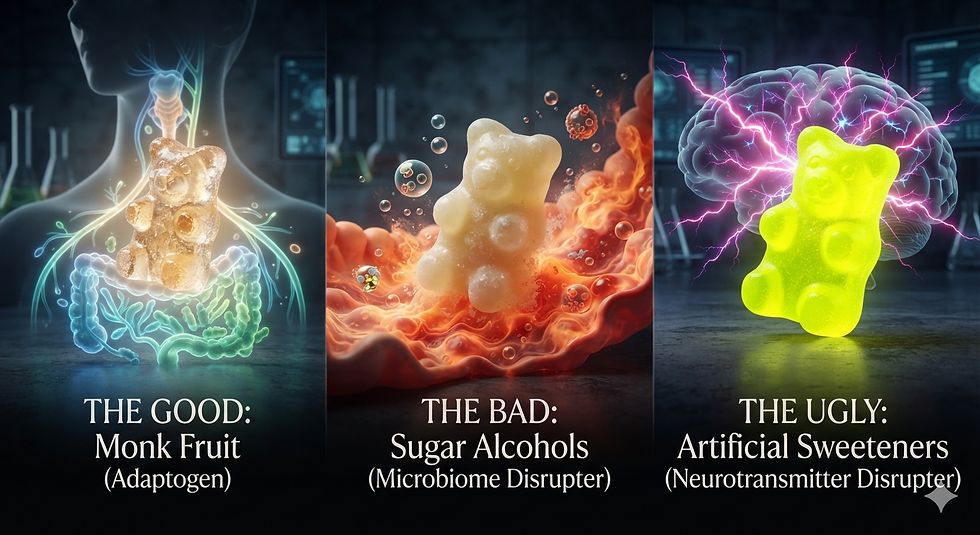
Monk Fruit and Allulose Erythritol Aspartame Xylitol Equal
Sorbitol Sucralose
Maltitol Saccharin
Mannitol Acesulfame Potassium
Isomalt Ace-K;
Neotame
Winning the Battle
If you are already battling daily stress and anxiety, it is time to take control of your environment. Step into your kitchen, open the pantry, and aggressively audit your food labels to ferret out these hidden, toxic sugar substitutes. By eliminating these chemical triggers from your daily routine, you can finally clear the biological noise, protect your nervous system, and build a clean foundation for maintaining healthy stress levels
Need help managing your Toxic Sweetness and Mental Health? Eileen is a Certified Unified Mindfulness Teacher and Alternative Healer who has been on multiple vision quests to be a clear and effective conduit for your growth and healing. Visit https://relaxandexpand.com to contact


